
On the day that my mother died, only hours after we had held her hand and she took her last almost imperceptible breath, my father and I cleaned out her handbags. I don’t know what we were thinking. We weren’t. It’s impossible to take in when it finally happens, the death that you knew was arriving from the moment the terminal cancer diagnosis was announced.
My father was very keen to get things sorted as quickly as possible, as if sorting out mum’s stuff, removing it, would remove the grief. I followed along in a kind of daze. I don’t know why we settled on the handbags. Perhaps they were personal but not so personal or intimate as her clothes, or underwear, or jewellery. The handbags were in the middle drawer on the side of the master bed. My parents were never wealthy, but they bought quality items, often on their many travels. Many of mum’s bags were Italian. We looked through them to take out stray items, to make them neat and tidy for the op shop, or to show the women who come to clean mum and dad’s apartment on a weekly basis and are grateful for useful items.
Objects are powerfully related to who has owned them, who has used them. They are memory holders, precious because of their links to those we love. Many of these small bags were familiar, they had hung from mum’s shoulder or been clutched in her hand. She had been a stylish and elegant woman, not flamboyant but always beautifully put together with care and attention. Here was the handbag she had brought home for me once and I had not really used. She had reclaimed it and used it herself. There were others I did not recognise, having lived in another country most of my adult life.
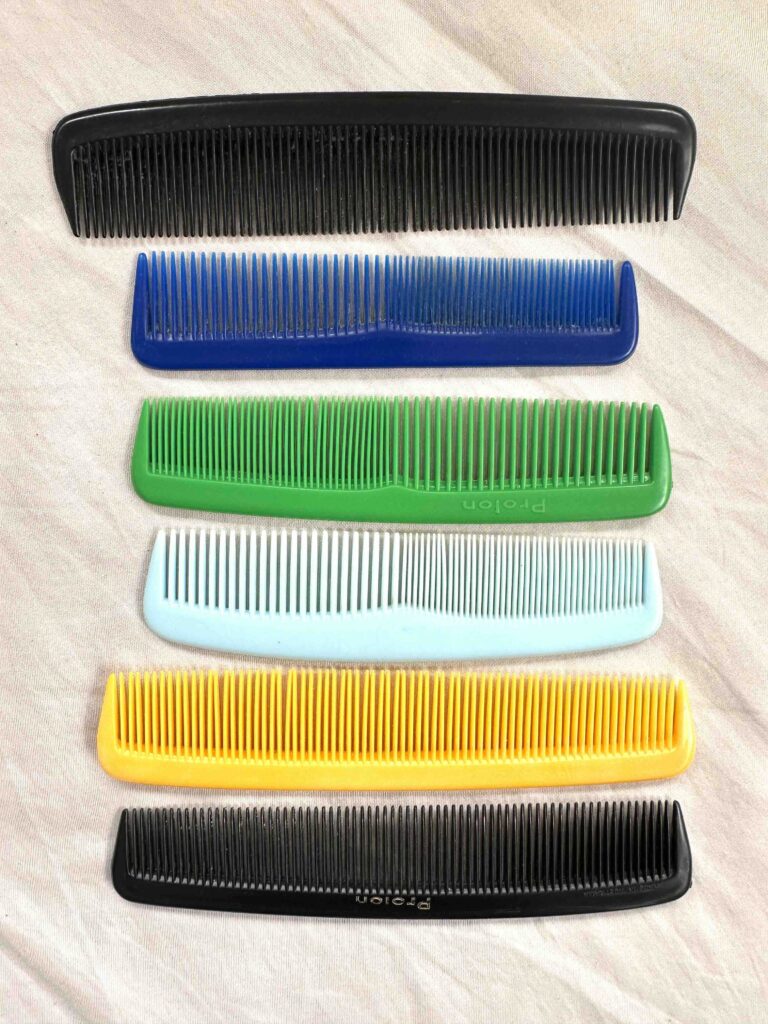
Here was a handkerchief and a comb. In another, a clean tissue and another comb. In another still, just a comb. Coloured plastic, none were special, simply a mass-produced item that mum had tucked into her bag for that quick moment when her fine white curls would need taming. In total there were six. I loved that she had six combs, that they might migrate from time to time from one bag to another when she remembered. I imagined her quickly choosing a bag, dad impatient to get going, then be out someplace, reach into it and find no comb. She would say ‘bother’ the way she does. The way she did. The combs spoke to me of mum. She was highly creative with a strong character but sometimes she could be very ditzy. I found them extraordinarily poignant.
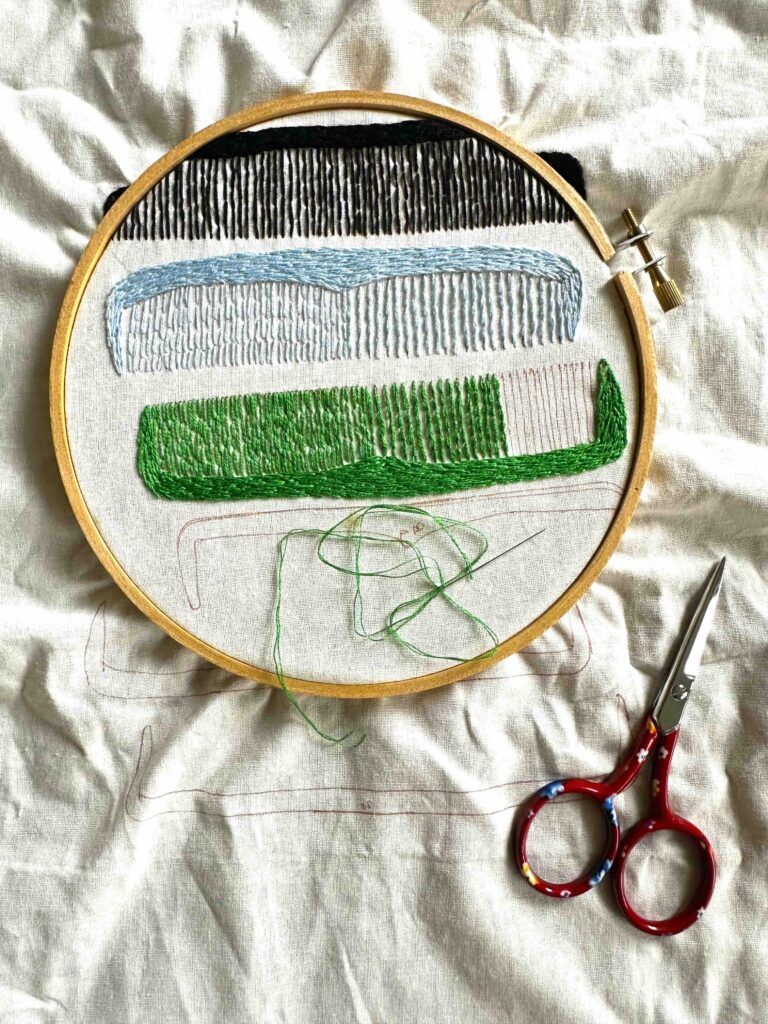
The combs came home with me to Brisbane, to sit in my bedside table drawer along with her order of service. I decided to embroider them on a piece of fabric as another kind of memento, a more public one. Stitching is reparative. Through the care and attention you must give small stitches something is worked on, worked through. With almost no public mourning rituals anymore it can be hard to know what to do while we actively grieve. I would like to wear black, but everyone does and now it means nothing. Mum was an excellent craftsperson, and I know she would find it highly amusing that I was embroidering her cheap combs. So strange that such small, everyday items, casually acquired and equally casually thrown out, could mean so much.
RIP Frances Mary Rogers nee Alexander
1937-2025